
Pier and Beam Foundation Repair Dallas, TX
Pier and Beam Foundation Repair Dallas Homeowners Trust With Their Historic Homes
Older homes across Lakewood, East Dallas, and the M-Streets weren’t built on a slab — they were built on timber and concrete piers, which means they fail differently and need a specialist who actually understands crawl spaces. Our house raising and leveling Dallas technicians combine hydraulic jacking with hands-on structural wood replacement to correct sagging floors at the source. Every project starts with a free, no-obligation crawl space and pier inspection.
Free
Crawl space & pier inspection
Craftsman-Led
Structural wood replacement
Lifetime
Transferable warranty
Licensed & Insured in Texas
Lifetime Transferable Warranty
Free Crawl Space & Pier Inspection
Pressure-Treated, Ground-Contact Lumber
The Hook
Why Pier and Beam Foundations Fail in Dallas
Pier and beam foundations were the standard for Dallas homes built before the 1960s, and while the construction method has real advantages, it comes with a vulnerability slab foundations don’t share: an open crawl space. That gap between your floor joists and the ground is supposed to stay dry and ventilated. In practice, North Texas humidity gets trapped under the house, foundation vents get blocked or painted shut, and moisture has nowhere to go. At the same time, the same shifting clay soil that cracks slabs pushes and pulls on the piers themselves, tilting them out of plumb and leaving sections of the floor system unsupported. The combination is what does the real damage: trapped humidity slowly rots sill plates and joists from below, while uneven pier movement forces the same wood to carry loads it was never leveled for. Sagging floors, wood rot, and squeaking rooms rarely show up as a single problem — they compound, because a rotten joist under load sags further, which stresses the boards around it, which traps even more moisture in the low points. In historic Dallas homes especially, this cycle can run for years before it’s visible from inside the house, which is why a crawl space most homeowners have never actually looked into is usually where the real story is.
Trapped Humidity
Blocked or painted-shut vents leave under-floor moisture with nowhere to go.
Shifting Clay Soil
The same expansive clay that cracks slabs tilts piers out of plumb.
Wood Rot Sets In
Sill plates and joists closest to the ground decay first, often unseen for years.
Diagnostic Symptom Checklist
What Your Home Is Telling You
Most homeowners don’t start by searching for a foundation company — they start by searching for an explanation. Here’s what your home’s warning signs actually mean for the slab underneath it.
Cracking Drywall Near Doors, Windows, and Ceilings
If you've searched why is my drywall cracking in Texas, the answer is almost always the same: slab movement transferring stress upward into the framing and sheetrock above it. Thin, hairline cracks along a paint seam are usually cosmetic. Diagonal cracks running from the corner of a door or window frame, or cracks that keep reappearing after you patch them, point to active movement in the slab section beneath that wall.
Doors That Stick, Drag, or Won't Latch
A doors sticking foundation issue is one of the most common reasons homeowners first call us. As a section of slab drops or tilts, the door frame set into that wall shifts out of square, and the door no longer sits where it used to — even a few millimeters of movement is enough to make a door bind against the frame or stop latching correctly.
Stair-Step Cracks in Exterior Brick
Cracked brick repair in Dallas is one of our most requested services, and the pattern is easy to recognize once you know what to look for: diagonal cracks that step up through the mortar joints, following the brick pattern rather than running straight through it. Because brick doesn't flex, it's often the first material to visibly crack when the slab beneath it settles unevenly.
Gaps Opening Around Window Frames
Gaps around window frames - where brick or siding meets the frame, or where the frame itself has pulled away from the wall - happen when the wall section supporting that window has shifted relative to the rest of the structure. This is frequently paired with a window that's suddenly harder to open or close.
Sloping or Uneven Floors
A floor that visibly slopes, or a marble that rolls toward one side of a room on its own, means the slab beneath that area has dropped relative to the rest of the home. This is one of the more reliable indicators of section-specific settlement rather than uniform, whole-house shifting.
Separation at Baseboards or Porch Slabs
A widening gap between the baseboard and the floor, or a visible step forming where a porch, patio, or garage slab meets the main house, both indicate the two surfaces are no longer moving together - almost always because one side has settled while the other hasn't.
The Anatomy of Under-Floor Decay
What Your Home Is Telling You
Most pier and beam problems are diagnosed from the outside — homeowners feel them before they ever see the crawl space. Here’s what’s actually happening underneath.
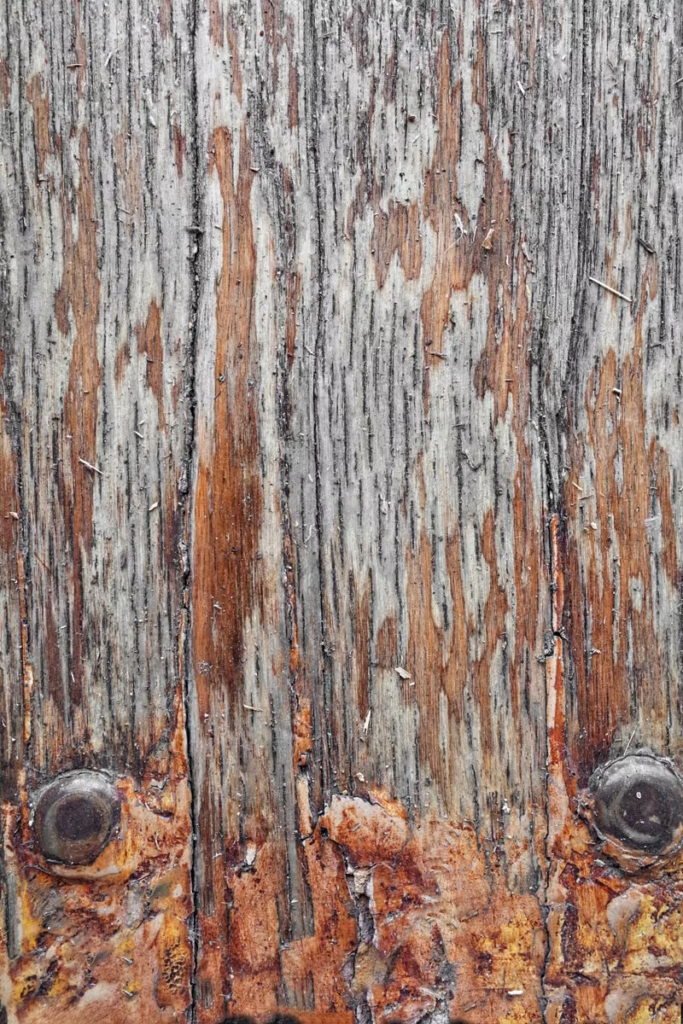
Sagging Floors
Sagging floors are usually the first thing homeowners notice, often felt before they're seen — a soft spot near a doorway, a floor that dips toward the center of a room, or furniture that no longer sits level. This almost always means a joist or beam below has lost support, either from a pier that's shifted out of plumb or from wood that's decayed enough to lose its structural strength.
Musty Crawl Space Odors
Musty crawl space odors that drift up through floor vents or registers are a direct sign of trapped moisture, and by the time you can smell it from inside the house, active wood rot or mold growth is usually already underway beneath the floor.
Rotten Sill Plates
The sill plate is the horizontal timber that sits directly on top of your foundation piers and anchors the floor joists to the structure below — and because it's the piece of wood closest to the ground and any standing moisture, it's usually the first to go. A rotten sill plate replacement in Texas isn't optional once decay sets in; a compromised sill plate can no longer transfer the weight of the house down into the piers correctly, which is when localized sagging turns into a wider structural problem.
Doors and Windows Sticking
As the floor system shifts with the piers beneath it, door and window frames set into the walls above shift out of square right along with it — the same movement that causes a sagging floor is usually the reason a door has started dragging or a window won't stay open.
Any of these on their own can look minor. Together, they’re the signature of under-floor structural repair in Dallas that’s overdue — and the earlier it’s addressed, the less wood has to be replaced.
Our Specialized Restoration Process
Pier and Beam Foundation Repair Dallas: Our Restoration Process
Master-level repair, broken into four distinct stages — from first inspection to the final pier.
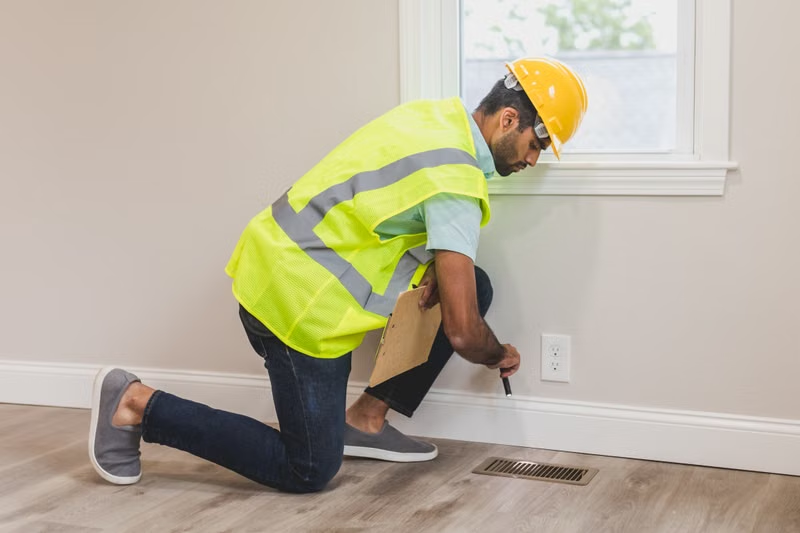
Comprehensive Crawl Space Diagnostic & Moisture Mapping
Every project starts with a technician physically entering the crawl space — not inspecting from the access door — to map pier plumbness, moisture readings, and wood condition joist by joist. We document exactly which sections of sill plate, joists, and beams show decay, and cross-reference that against elevation readings taken throughout the house.
Precision House Raising and Leveling Dallas Protocols
Using hydraulic jacks positioned at each affected pier, we raise the floor system back toward its original elevation in controlled increments, section by section. House raising and leveling in Dallas has to be done slowly and by zone — lifting too much too fast can crack drywall or rack door frames that have settled into their current position over years.
Structural Wood Replacement: Sill Plates, Joists & Beam Sistering
Any wood that's failed inspection gets replaced, not patched. That includes full rotten sill plate replacement sections, sistering new lumber alongside compromised joists to restore load capacity, and replacing beams where rot has gone beyond what sistering can fix. All replacement lumber is pressure-treated and rated for ground-contact exposure.
Pier Re-shimming or Concrete Base Reinforcement
Once the floor system is level and the wood is sound, each pier is re-shimmed to lock in the new elevation, or reinforced with a poured concrete base where the original pier has degraded. Joist re-shimming is checked at every pier, not just the ones that triggered the original inspection, since a pier that looks fine today is often the next one to move.
Crawl Space Health & Moisture Control
A Dry Crawl Space Is the Other Half of the Repair
Structural repair alone doesn’t stop the cycle that caused the damage in the first place — the crawl space still needs to be dry. That’s the other half of crawl space repair in DFW: encapsulation with a sealed vapor barrier where ground moisture is the main driver, vent repair or replacement where blocked or painted-shut vents are trapping humid air, and drainage correction where water is pooling under the house after rain instead of draining away. Skipping this step is the single most common reason pier and beam repairs need to be redone within a few years — the wood gets replaced, but the moisture that rotted it the first time never left.
Crawl Space Repair DFW — What's Included
- Sealed vapor barrier encapsulation over exposed ground
- Foundation vent repair, replacement, or re-balancing
- Drainage correction to stop water pooling under the house
- Post-repair moisture check before the job is closed out
Related Services
Not Sure Pier & Beam Repair Is What Your Home Needs?
If your home sits on a poured slab instead of a crawl space, or your project is commercial, these are the services you’re probably looking for.
Slab Foundation Repair
For newer Dallas homes built on a poured concrete slab.
Commercial Underpinning
Engineered foundation repair for retail, office, and multi-family properties.
Find Your Neighborhood
Pier and beam repair specifics for Lakewood, East Dallas, and the M-Streets.
Pier & Beam FAQ
Pier and Beam Foundation Repair Questions, Answered
Straight answers for owners of historic Dallas homes researching crawl space and pier repair.
How can I tell if my pier and beam foundation is settling unevenly?
The clearest signs are floors that slope or bounce underfoot, doors and windows that stick or won’t latch the way they used to, and gaps opening up between baseboards and the floor. A simple check: set a marble or ball on the floor near an interior wall in a few different rooms and see if it consistently rolls toward one side — consistent rolling in the same direction across multiple rooms usually points to one section of the pier system settling lower than the rest, rather than normal, even settling.
What is a sill plate, and how do I know if I need a rotten sill plate replacement in Texas?
The sill plate is the horizontal wood beam bolted or set directly on top of your foundation piers, and it’s what your floor joists actually rest on and attach to. Because it sits closest to the ground and any crawl space moisture, it’s usually the first structural wood to decay. Signs you need a rotten sill plate replacement include a soft or spongy feeling in the floor near exterior walls, visible wood decay during a crawl space inspection, and musty odors concentrated near the perimeter of the house rather than the center.
Is pier and beam foundation repair more expensive than concrete slab repair?
It depends on the scope, not the foundation type. Pier re-shimming and leveling alone is often comparable to or less expensive than slab piering, since pier and beam systems are easier to access and adjust. Costs rise when structural wood replacement is involved — sistering a few joists is a modest repair, while replacing multiple sill plate sections and beams after years of untreated rot is a larger project. The only way to compare accurately is a free crawl space inspection, since the wood condition, not the foundation category, is what actually drives the price.
Free Crawl Space & Pier Inspection
Get a Craftsman's Read on Your Crawl Space
A technician physically enters the crawl space, maps every pier, and gives you a plain-language explanation of what’s happening underneath — plus a written repair plan if one is needed.
- Free, no-obligation crawl space & pier inspection
- Moisture readings and wood condition documented joist by joist
- Written, itemized repair plan — no phone quotes
- Appointments across Lakewood, East Dallas & the M-Streets
Schedule My Free Crawl Space & Pier Inspection
A structural specialist will follow up to schedule your visit.
Not Ready to Book? Just Call.
Our emergency line is staffed for homeowners who need a straight answer today, not a callback next week.
