Commercial Foundation Repair Dallas, TX — Enterprise Structural Services
Commercial Foundation Repair Dallas Facility Teams Trust to Protect Asset Value and Operational Uptime
Slab-on-grade failure in a distribution center or retail asset isn’t a cosmetic issue — it’s an operational and liability exposure that compounds every day it goes unaddressed. Our engineered deep underpinning and industrial concrete leveling DFW teams restore load-bearing capacity to warehouses, logistics hubs, and retail footprints without halting your operation. Every engagement begins with a structural assessment and a written scope aligned to your facility’s compliance and uptime requirements.
Engineer-Reviewed
Every structural scope
OSHA-Compliant
Site protocols
Off-Hours
& weekend scheduling available
Licensed & Insured Commercial Contractor
Engineer-Reviewed Structural Scopes
Off-Hours & Weekend Scheduling
OSHA-Compliant Site Protocols
The Hook
Industrial Structural Risks & Liabilities Across DFW
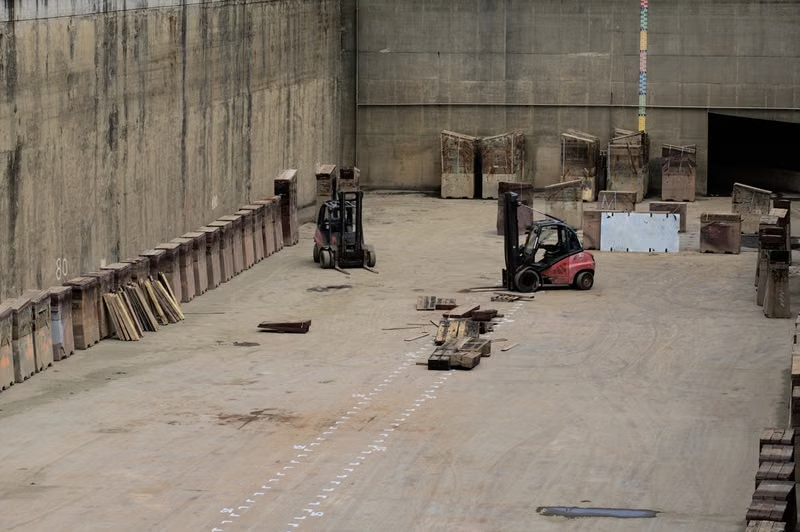
Distribution centers, big-box retail, and light-industrial facilities across the DFW Metroplex are built on slab-on-grade foundations engineered for heavy, concentrated loads — racking systems, dock levelers, forklift traffic, and rooftop mechanical units. That engineering assumes stable, uniform soil support. North Texas Blackland Prairie clay does not provide it. The same expansive clay that cracks residential slabs swells and contracts beneath commercial footprints too, except the loads riding on top are measured in tons, not furniture. When a section of slab settles even a fraction of an inch, the result isn’t a cosmetic crack — it’s an uneven load path that racking systems weren’t designed for, a dock leveler that no longer seats correctly, or a floor joint that becomes a forklift trip hazard. Left unaddressed, localized settlement expands: adjacent slab sections take on load they weren’t sized for, exterior masonry separates at movement joints, and the building’s structural systems begin absorbing stress they were never engineered to carry. For asset managers, this isn’t a maintenance line item — it’s an asset preservation issue, a potential OSHA standards violation, and, if a tenant or employee is injured, a direct liability exposure with the building’s net asset value attached to it.
Asset Value
Unaddressed settlement compounds and depresses net asset value.
OSHA Exposure
Trip hazards and racking misalignment carry direct compliance risk.
Operational Continuity
Uneven floors disrupt forklift traffic and throughput.
Signs of Industrial and Commercial Slab Failure
Operational Failure Signs We're Called In For
These are the operational failure signs that most often prompt facility and property management teams to search for dallas commercial foundation contractors.
Major Floor Layout Unevenness
Measurable slope or elevation variance across racking aisles or production lines, typically first flagged during a routine forklift safety audit.
Exterior Masonry Separation
Widening cracks at control and movement joints on the building envelope, visible from the exterior before interior symptoms appear.
Racking Re-Leveling Frequency
Racking systems requiring re-leveling or re-anchoring more often than manufacturer tolerance allows, indicating an active slab issue beneath.
Trip Hazards on Warehouse Floors
Raised or dropped slab joints and transitions, often documented in an incident report before the structural root cause is investigated.
Failing Loading Dock Structural Framing
Dock levelers that no longer seat flush, dock seals that no longer compress evenly, and visible separation at the dock apron.
Dock and Man Doors Binding
Roll-up doors, dock doors, or man doors that no longer close, seal, or latch correctly as the surrounding structure shifts.
Major Floor Layout Unevenness
Measurable slope or elevation variance across racking aisles or production lines, typically first flagged during a routine forklift safety audit.
Trip Hazards on Warehouse Floors
Raised or dropped slab joints and transitions, often documented in an incident report before the structural root cause is investigated.
Exterior Masonry Separation
Widening cracks at control and movement joints on the building envelope, visible from the exterior before interior symptoms appear.
Failing Loading Dock Structural Framing
Dock levelers that no longer seat flush, dock seals that no longer compress evenly, and visible separation at the dock apron.
Racking Re-Leveling Frequency
Racking systems requiring re-leveling or re-anchoring more often than manufacturer tolerance allows, indicating an active slab issue beneath.
Dock and Man Doors Binding
Roll-up doors, dock doors, or man doors that no longer close, seal, or latch correctly as the surrounding structure shifts.
Enterprise-Grade Structural Solutions
Commercial Foundation Repair Dallas: Enterprise-Grade Structural Solutions
Four technical capabilities, applied to the specific load-bearing requirements of your facility.
Helical & Bored Deep Steel Underpinning
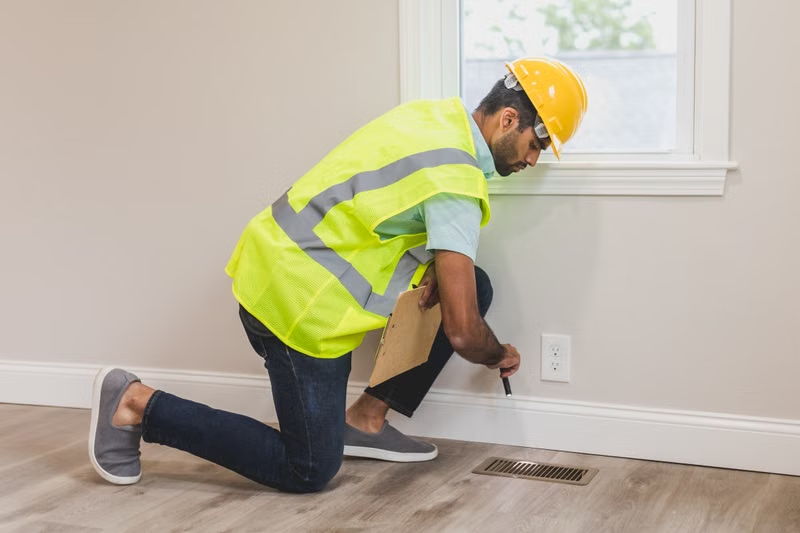
Our commercial underpinning services Texas facility teams specify for heavy structural loads use helical or bored deep steel piers, driven or drilled to competent load-bearing strata well below the zone of seasonal soil movement. Pier selection and spacing are engineered to the specific load-bearing capacities of your structure — racking bays, dock aprons, and mechanical pads are treated as distinct load zones, not a uniform slab.
High-Density Polyurethane Foam Void Filling & Deep Injection
Where sub-slab voids have formed from soil migration or erosion, high-density polyurethane injection fills and stabilizes the void from beneath, lifting affected slab sections with minimal surface disruption. This method is frequently specified for isolated settlement — a single dock apron or a section of warehouse floor — where full underpinning isn't structurally necessary.
Structural Concrete Leveling & Soil Stabilization
For broader slab-on-grade failure across a facility footprint, we combine structural concrete leveling with soil stabilization techniques that address the underlying moisture and load-bearing conditions, not just the surface elevation. The objective is a floor system that returns to design tolerance and stays there through the next wet-dry cycle.
Comprehensive Structural Engineer Logistical Planning
Every commercial scope is developed alongside a structural engineer and sequenced to your facility's operational calendar. Work is scheduled during off-hours, weekends, or phased around active racking and traffic lanes, so minimal facility disruption is built into the project timeline from the first day of planning, not negotiated after mobilization.
Logistical Footprint & Downtime Mitigation
Engineered Around Your Operating Calendar, Not the Other Way Around
We understand that for a logistics hub or retail asset, downtime isn’t an inconvenience – it’s a direct line to lost throughput, missed SLAs, and tenant dissatisfaction. Every commercial engagement includes a logistics plan developed before work begins: phased work zones that keep unaffected aisles, dock doors, and traffic lanes fully operational, off-hours and weekend scheduling where facility operations require it, and temporary load-path protection so racking and machinery can continue operating safely around an active work zone. Our crews coordinate directly with your facilities and safety teams throughout the engagement, so your building remains compliant with OSHA standards and open for business for the full duration of the project.
Downtime Mitigation - What's Included
- Phased work zones around active traffic and racking
- Off-hours, overnight, and weekend scheduling
- Temporary load-path protection for continued operations
- Direct coordination with your facilities & safety teams
Commercial & Industrial FAQ
Commercial Foundation Repair Questions, Answered
Straight answers for property managers, facility leads, and structural engineers evaluating a commercial scope.
How do you prevent warehouse operational downtime during commercial underpinning services in Texas?
Downtime prevention starts in the planning phase, not on site. Before mobilization, we map your facility’s active traffic lanes, racking layout, and shift schedule, then sequence the underpinning work into phased zones that keep the rest of the building operational. Where full closure of an aisle or dock door is unavoidable, that work is scheduled during off-hours, overnight, or weekend windows agreed with your operations team in advance, and temporary load-path protection keeps adjacent areas safe for continued forklift and foot traffic.
What standard certifications and liability limits do your Dallas commercial foundation contractors maintain?
Our commercial crews operate under standard general liability and workers’ compensation coverage sized for industrial and commercial project scopes, and every structural scope is engineer-reviewed prior to mobilization. Specific certificate limits, bonding, and insurance documentation are provided as part of the RFP process so your risk management or procurement team can verify coverage against your facility’s requirements before work begins.
Can polyurethane injection handle heavy forklift wheel loads and machinery vibration?
Yes, when it’s specified and installed correctly. High-density polyurethane is engineered for exactly this kind of concentrated, repetitive load — forklift wheel loading, rack leg point loads, and machinery vibration are all accounted for in the mix density and injection pattern we specify for industrial floors. The material cures rigid, not resilient, so it restores structural support rather than acting as a cushioning layer, which is what allows it to perform under sustained industrial traffic rather than just filling a void cosmetically.
Engineer-Led RFP / Consultation
Request a Structural Assessment for Your Facility
Submit your facility details and a structural specialist will follow up to scope a site assessment and, where appropriate, a written RFP response.
- Engineer-reviewed scope before mobilization
- Certificate of insurance & bonding documentation on request
- Logistics and downtime mitigation plan included in scope
- Enterprise priority response for time-sensitive facilities
Request an Engineer-Led RFP / Consultation
A structural specialist will follow up to scope your facility.
Time-Sensitive Facility? Call the Enterprise Line.
Our enterprise priority line is staffed for property and facility teams who need a structural specialist on the phone now, not a callback queue.
